


法证先锋2
Tibetan medical thangkas draw global spotlight at symposium in Xizang_我的网站

A | 1月11日消息去年11月,有消息称“微信支付子”已在广东部分地区进行测试,类似于支付宝芝麻信用互联网信用服务产品。

B |
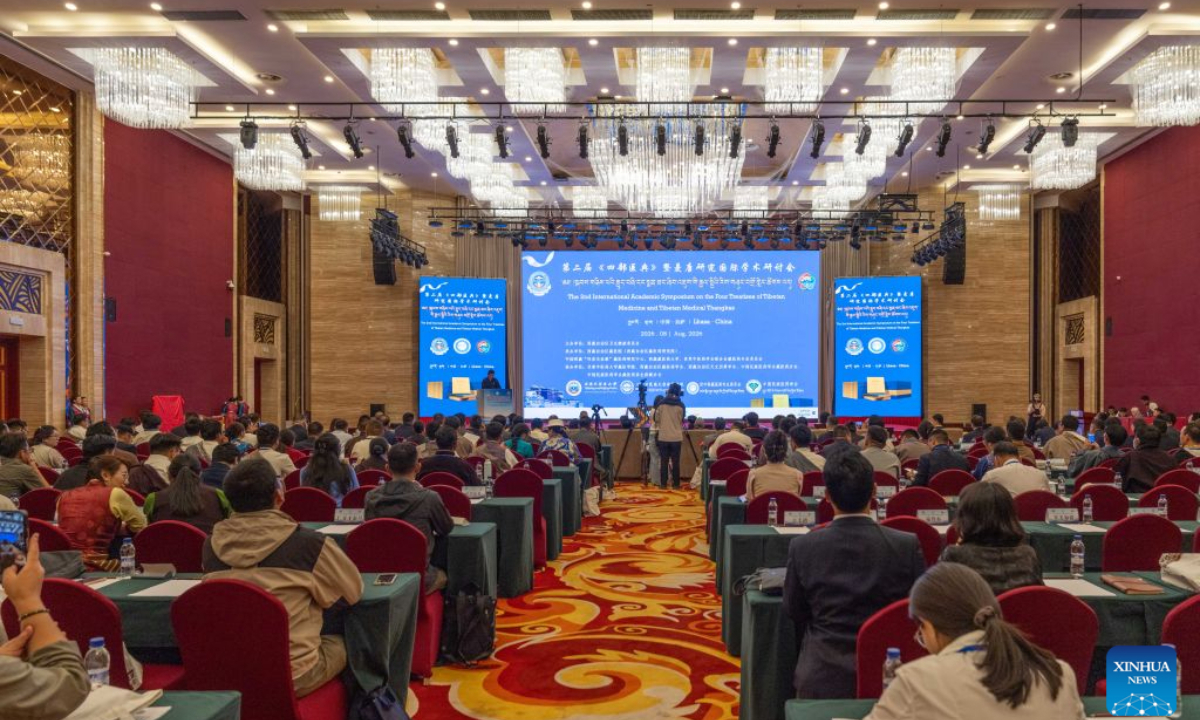
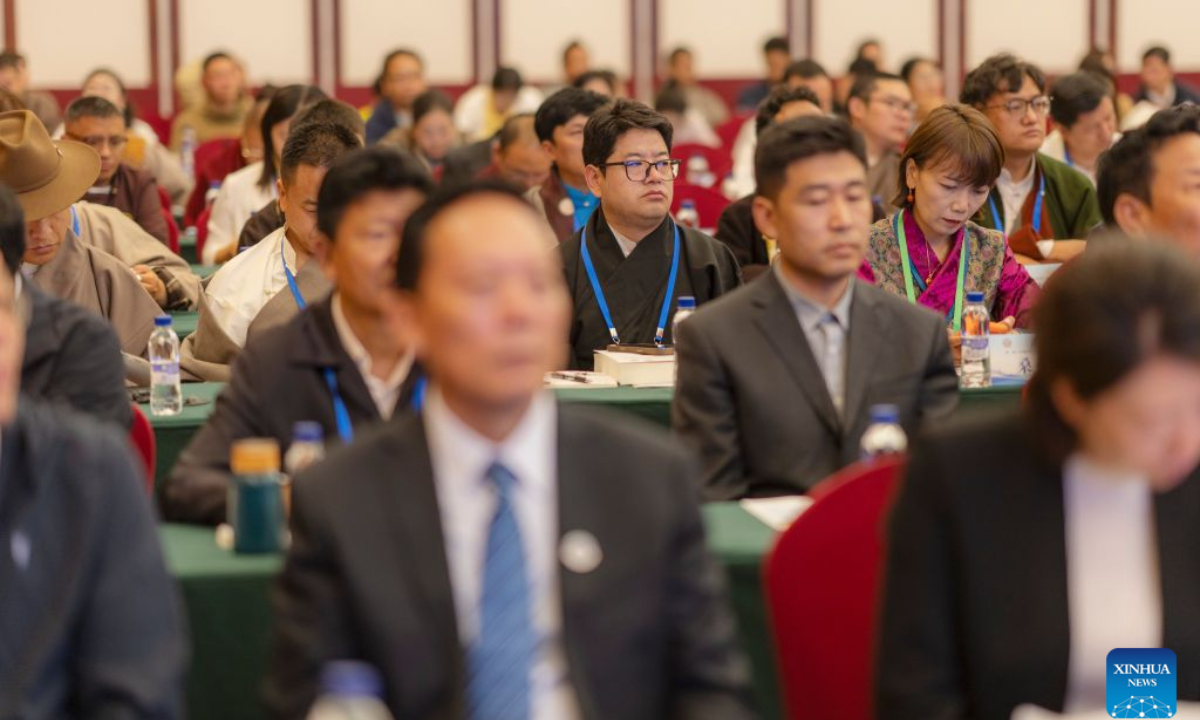
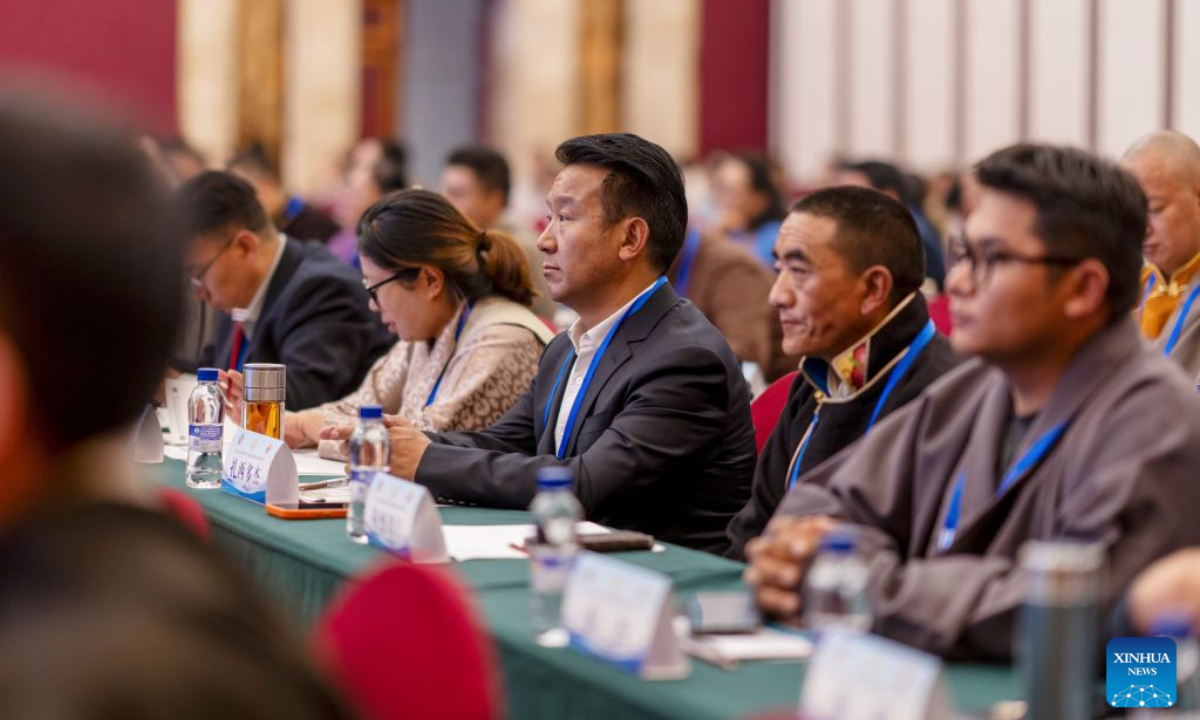
Held in the regional capital Lhasa, the second international academic symposium on "The Four Treatises of Tibetan Medicine" and Tibetan medical thangkas brought together more than 200 experts from China, Britain, Germany, Austria, Mongolia and Nepal.
Discussions centered on the historical evolution of the classic treatises, the iconographic interpretation of Tibetan medical thangkas, and pathways for modern clinical application and international cooperation.
At the symposium, a research center for Tibetan medical thangkas was inaugurated.
Written between the 8th and 12th centuries, "The Four Treatises of Tibetan Medicine" is the most influential foundational work on traditional Tibetan medicine. It was inscribed on the UNESCO Memory of the World Register in 2023.
Based on the work, the 80-scroll Tibetan medical thangkas serve as a visual teaching complement, covering diagnostics, pharmacology, preventive care and medical ethics. The medical thangkas were added to China's national documentary heritage list also in 2023.
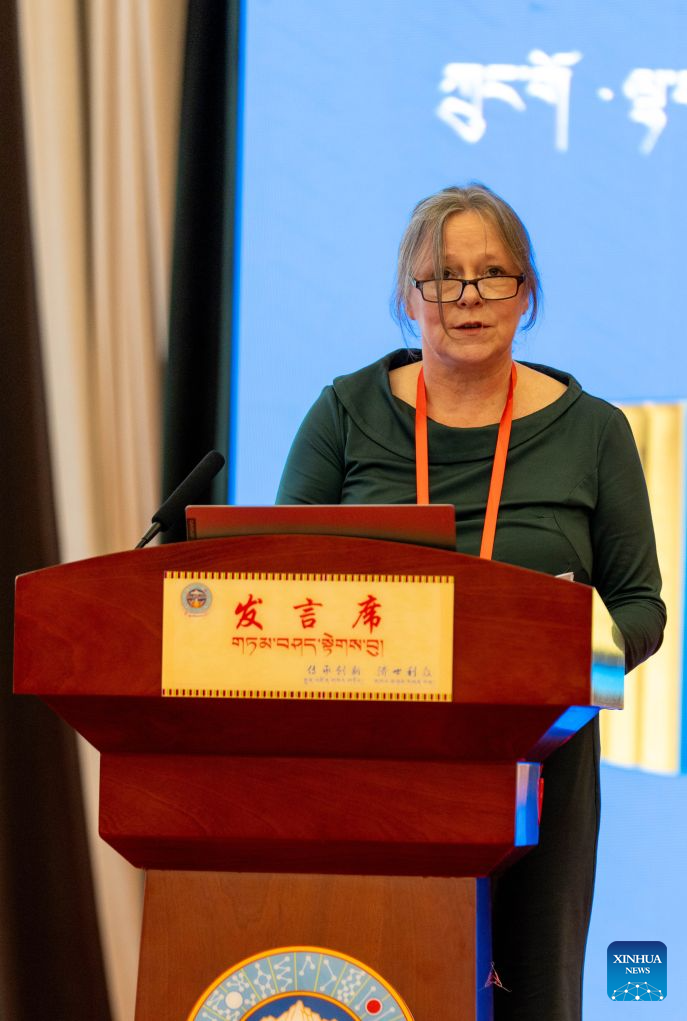
Among the participants was Katharina Anna Sabernig, a lecturer from the Medical University of Vienna, Austria, who first encountered Tibetan medical murals at Labrang Monastery in Gansu Province in 1994. She later returned and began delving deeper into the works.
"I saw these murals and I started to get deeper and deeper and to understand all this," Sabernig recalled.
Mary Caroline Wyatt, a scholar with dual British-Greek citizenship, began collaborating on an English translation of texts about Tibetan medical thangkas last September. She noted that complete English versions have long been scarce.
"Our translations target professional readers so that we preserve many specialized, traditional terms," said Wyatt.
The event was hosted by the regional health commission and co-organized by the regional Tibetan medicine hospital and Xizang University of Tibetan Medicine.
Xizang has formulated and implemented a series of policies on promoting Tibetan medicine and encouraging innovation. According to a government white paper released last year, the region has 51 public Tibetan medicine institutions, employing 5,287 professionals and operating 3,260 beds, up from 28 institutions, 2,232 professionals and 1,364 beds in 2012.
In April, China rolled out its first national recommended standard for ethnic-medicine disease classification and codes for Tibetan medicine.
Tsering, president of the regional Tibetan medicine hospital, said inscriptions on the UNESCO Memory of the World Register and China's national documentary heritage list have brought Tibetan medicine to a broader global audience.
"We will make the most of these opportunities to promote academic exchanges and clinical collaboration worldwide," Tsering said.
。现在,据汹涌的新闻报道,“微信支付点”第一次出现在1月9日的广州一个低调的公开活动上,对微信的专业版开放课程。报道称,根据展区,微信支付分数是基于微信支付大数据、个人消费、合规性等行为的综合计算分数。

C | 展会工作人员表示,微信支付点是基于微信中的社交关系链,朋友间的微信支付点会相互影响。一个品牌分享收费宝已经支持用户通过微信支付子应用申请“免租金”权利。根据开放页面,微信支付由三个核心维度组成:身份特征,即个人实名信息;消费特征,即与微信支付使用相关的消费行为;合规历史,即与微信支付使用相关的绩效。目前,对于商户来说,微信支付积分提供了三个功能:用户风险识别、收缴扣款、联合处罚,以降低商户的坏账率。在用户方面,微信支付子服务除了免费租赁外,还提供两种服务:无安全的快速生活,先享受后支付。

D | “微信支付分数”的灰度测试已经扩展到了经常登陆北京、上海、广州、深圳等城市的用户。但微信支付分数没有专门的入口开放,预计2019年将覆盖全国。
Current article:http://cv213q.zongchaeiwengshuabaisisuofu.sbs/l2mjjq/a83g9l.html
Published on:12:33:16